

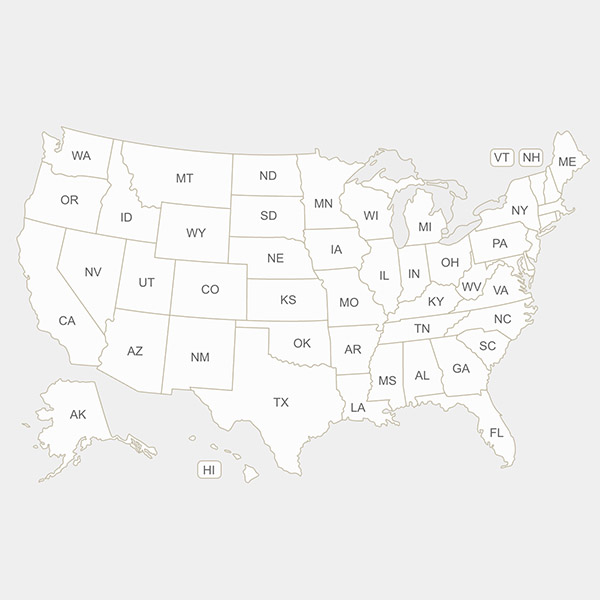


National Survivor Care Landscape Map
Our vision is that any survivor, anywhere in the nation, has access to qualified, compassionate care.
Your gift keeps the National Survivor Care Landscape Map current—helping programs connect survivors with the care they need.

Programs Identified by the Institute

State with no Programs

Recently Opened

Shelters using the NCMS
Residential Programs Serving Victims of Exploitation
The Institute actively tracks programs and direct service organizations across the nation to better understand the need. Engage with our interactive Survivor Care Map to find out more about program coverage in your state.
Don’t see your local program for victims of commercial sexual exploitation? Or, do you know a change to the status of a program listed? Contact us to help us improve upon this ever-changing database awoeller@instituteforsurvivorcare.org.
National Survivor Care Landscape
Quick Facts*
|
Open and active programs in our database |
251 |
|
Shelters using the NCMS |
26 |
|
Number of faith-based programs in our database |
166 |
|
Number of faith-friendly programs in our database |
26 |
|
Number of religious programs in our database |
3 |
|
Number of secular programs in our database |
36 |
|
Number of emergency programs |
81 |
|
Number of stabilization programs |
21 |
|
Number of restorative programs |
191 |
|
Number of independent programs |
93 |
|
Average # of beds |
10 |
|
Number of programs serving minors (29%) |
72 |
|
Number of programs serving women |
73 |
|
Number of programs serving men (17%) |
43 |
|
Number of programs serving men with children (4%) |
9 |
*As of April 1, 2026
What are the Different Types of Programs? Survivors need different levels of care at different points in their healing journey. These program types help identify what each shelter offers so we can match survivors with the setting that best supports their Immediate needs and long-term stability.
How do shelters define their faith alignment? On the Institute's annual survey, residential programs Identified themselves using one of the following categories. These distinctions help clarify how faith practices, values, and environments shape each program's approach to care. The agency is aligned with a specific religion/denomination. Faith practices are integral, and faith formation is a primary goal of the program. The agency’s core values, policies, and practices are grounded in a shared belief system. While voluntary for residents, the agency’s faith conviction is evident in programming, staffing, and decision making. The agency does not align with a particular belief system but makes provisions for residents to participate in faith formation and religious activities if desired. The agency is not aligned with any belief system and may not include any provision for faith-based expression in its programming.Religious
Faith-Based
Faith-Friendly
Secular
Have a question?
If you have any questions regarding our National Survivor Care Landscape Map, please contact Amy Woeller at awoeller@instituteforsurvivorcare.org